

Hospitality tech
What Technologies Help Automate the Operation of the Hotel
UAE hotels operate under constant pressure: thousands of arrivals during exhibition weeks at DWTC, charter groups moving through Dubai and Abu Dhabi airports, and guest expectations shaped by apps that respond in seconds. To keep queues short and staff focused on hospitality, properties across the Emirates have adopted a stack of automation tools, from self check-in kiosks and ID readers to mobile keys and AI-driven housekeeping dashboards.
This guide walks through the technologies that genuinely move the needle, where they help, where they frustrate guests, and how to deploy them without losing the human touch that defines Emirati hospitality.
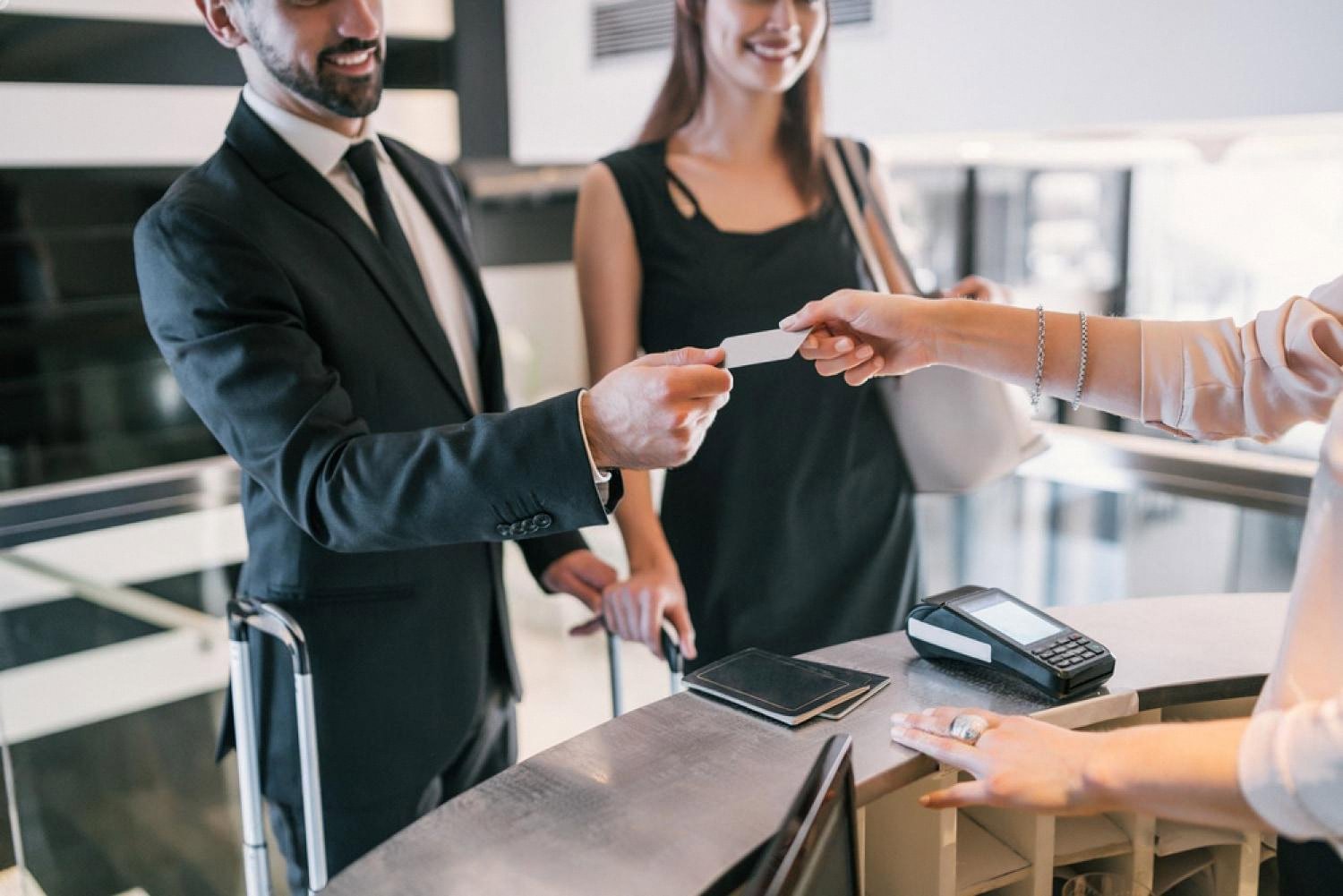
The core stack
The main automation tools in a modern UAE hotel
Most four and five-star properties in Dubai, Abu Dhabi and Sharjah now run some combination of five systems: a property management system (PMS) in the cloud, a channel manager connecting Booking.com, Agoda and direct bookings, a self check-in kiosk in the lobby, an ID and passport scanner integrated with the PMS, and a mobile or digital key solution for room access.
Behind the scenes, housekeeping tablets, AI chatbots on WhatsApp and energy management for in-room climate complete the picture. Each layer removes a specific friction point for either the guest or the staff.
Pros and cons of hotel automation
Pros
- Shorter queues. A kiosk can process a check-in in under two minutes versus five to eight at the desk.
- Fewer data-entry errors. Scanning a passport pulls name, nationality and date of birth exactly as printed.
- Compliance made easier. Guest records are formatted correctly for the UAE Ministry of Interior and Dubai Tourism reporting on the first try.
- Staff freed for service. Receptionists stop typing and start greeting, upselling and solving real problems.
- 24/7 arrivals. Late red-eye flights into DXB or AUH no longer wait for a night manager.
Cons
- Upfront cost. A single kiosk with scanner and key encoder can run between AED 25,000 and AED 60,000.
- Integration pain. Older PMS platforms do not always talk cleanly to new hardware.
- Guest hesitation. Some travellers, especially first-time visitors to the UAE, still want a human welcome.
- Downtime risk. If the network drops, so does the kiosk, and staff need a manual fallback.
- Privacy concerns. Biometric data must be stored and processed under UAE Federal Decree-Law No. 45 of 2021 on personal data protection.

Tip 1
Deploying self check-in kiosks the right way
A kiosk is only as good as the journey around it. The hotels that get real value from kiosks treat them as one option among several, not a replacement for the front desk.
- Place the kiosk at a diagonal to the reception counter so guests see both options at once.
- Offer Arabic, English, Russian, Hindi and Mandarin at minimum, these cover most inbound markets to the UAE.
- Keep the flow to five screens or fewer: scan booking, scan ID, confirm details, accept house rules, collect key.
- Have a staff member on floor duty during peak check-in hours (typically 14:00 to 20:00) to guide first-time users.
- Build a hard fallback: if the PMS link fails, the kiosk should still print a QR voucher the desk can honour.
Tip 2
Getting passport and ID scanning right
In the UAE, every guest check-in triggers a reporting obligation to the local authority (Dubai Police, Abu Dhabi DCT, and so on). An ID scanner tied into your PMS removes the biggest source of errors here, which is a tired agent transcribing an Arabic name from a Jordanian passport at 2am.
- Choose a scanner that reads both the MRZ and the chip. Chip reading catches tampered documents that pass visual checks.
- Support Emirates ID natively. Residents should not have to hand over a passport if their ID card is valid.
- Verify the integration certifies with your PMS vendor, Opera, Protel, Mews, and others each have their own middleware.
- Encrypt data at rest. Scanned images should never sit in a plain shared folder on the hotel network.
- Train staff on exceptions, damaged pages, expired visas and ICA residency transfers still need a human eye.
According to the UN Tourism organisation, Middle East arrivals grew faster than any other world region in 2023, so the volume of ID checks UAE hotels process is only going up.
Tip 3
Digital keys, biometrics and the fully automated arrival
The most advanced setups now combine the kiosk, the scanner and key issuance into one step. The guest scans their passport, the system matches it to the reservation, and a key is generated on the spot. That key can take several forms:
- Encoded RFID card. Still the most reliable, and familiar to every guest.
- Numeric PIN. Entered on a keypad at the room door, useful when a card is lost or shared across a family.
- Mobile key via Bluetooth. Sent to the guest’s phone through the hotel app, works well for repeat and loyalty guests.
- Fingerprint access. Enrolled at the kiosk, deleted at checkout. Convenient for pools and gyms as well as rooms.
- Facial recognition. Used in a handful of UAE properties, mostly for VIP floors.
Whichever route you pick, build a clear opt-out. A guest who prefers a plastic card at the desk should get one with no friction, biometrics are a convenience, not a condition of stay.
What to avoid when automating your hotel
- Do not remove the front desk entirely. A visible human presence remains part of what guests pay for in the UAE.
- Do not deploy biometrics without a written, bilingual consent screen that complies with the UAE data protection law.
- Do not launch during peak season. Pilot in a shoulder month, fix the bugs, then scale.
- Do not forget housekeeping. Automating only the front of house creates a bottleneck at room readiness.
- Do not pick hardware before software. The PMS integration list should drive the shortlist, not the other way around.
Frequently asked questions
How much does it cost to automate check-in in a UAE hotel?
Budget varies with the number of lobbies and the depth of integration. A single self-service kiosk with an integrated ID scanner and key encoder typically costs between AED 25,000 and AED 60,000 in hardware, plus a monthly software fee of AED 500 to AED 2,000 per unit.
Add PMS integration work (usually a one-off AED 10,000 to AED 30,000) and staff training. Most mid-sized properties recover the investment within 12 to 18 months through reduced front-desk headcount pressure and higher upsell conversion.
Is scanning a guest’s passport legal in the UAE?
Yes, and in most cases it is required. Hotels in the UAE must report guest arrivals to the local authority (for example Dubai Police or Abu Dhabi DCT), and passport or Emirates ID data is the standard input for that report.
However, the hotel must store the data securely, use it only for the stated purpose, and comply with UAE Federal Decree-Law No. 45 of 2021 on personal data protection. Guests should be informed in writing at the point of capture.
Will self check-in kiosks replace receptionists?
No. In practice, kiosks absorb the repetitive parts of check-in (data entry, key encoding, payment) and let receptionists focus on welcomes, problem-solving, upselling and local recommendations.
Properties that have run kiosks for a year or more typically keep the same front-office headcount but redeploy roles toward guest experience and concierge functions.
What is the difference between a mobile key and a biometric key?
A mobile key is a credential sent to the guest’s smartphone, usually opened by Bluetooth or NFC when they approach the door. The phone is the key.
A biometric key uses the guest’s own fingerprint or face, enrolled at check-in and deleted at check-out. The person is the key. Both remove the plastic card, but biometrics require stronger consent and data handling than mobile keys.
What happens if the kiosk or scanner goes offline?
Every well-designed deployment has a manual fallback. The front desk keeps a working terminal connected to the PMS, and the kiosk should be able to print a QR voucher or booking reference the desk can honour without needing a fresh scan.
Operationally, hotels run the kiosk network on a dedicated VLAN with a 4G or 5G failover modem so a single ISP outage does not stop check-ins.
Which types of UAE hotels benefit most from automation?
High-volume city hotels near DWTC, DXB, AUH and the Expo City area see the fastest payback because they handle large arrival spikes. Serviced apartments and extended-stay brands also benefit, since guests often arrive at odd hours and prefer self-service.
Ultra-luxury resorts automate the back office (housekeeping, maintenance, F&B ordering) more than the front, because their guests still expect a greeter at the door and a butler-led arrival.

Baseball fan, coffee addict, audiophile, hand letterer and front-end designer. Performing at the crossroads of design and sustainability to develop visual solutions that inform and persuade. My opinions belong to nobody but myself.